
Her Curvy Majesty… Queen Latifah
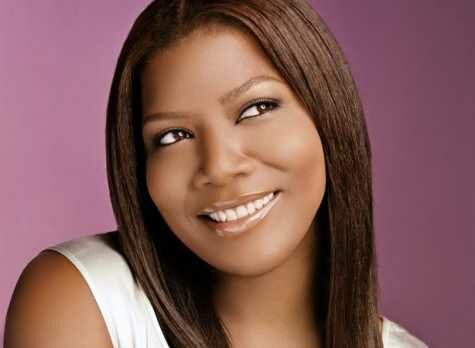
Dana Elaine Owens, 18 March 1970, East Orange, New Jersey, USA. Rap’s first lady, Queen Latifah, broke through in the late 80s with a style that picked selectively from jazz and soul traditions. The former Burger King employee maintained her early commitment to answer the misogynist armory of her male counterparts, and at the same time impart musical good times to all genders. After working as the human beat box alongside female rapping crew Ladies Fresh, she was just 18 years old when she released her debut single, “Wrath Of My Madness”, in 1988. A year later, her debut long-player enjoyed fevered reviews: an old, wise head was evident on the top of her young shoulders. Production expertise from Daddy-O, KRS-One, DJ Mark The 45 King and members of De La Soul doubtlessly helped as well. By the time of her third album, she had moved from Tommy Boy Records to a new home, Motown Records, and revealed a shift from the soul and reggae tones of Nature Of A Sista to sophisticated, sassy hip-hop.
Queen Latifah subsequently embarked on a career as an actor, notably in the hit streetwise black comedy, Living Single, where she played magazine boss Khadijah James. Other movie credits included Juice, Jungle Fever and House Party 2. As if that were not enough, she additionally set up her own Flavor Unit record label and management company in 1993, as an outlet for new rap acts as well as her own recordings. The first release on it, “Roll Wit Tha Flava”, featured an all-star cast including Naughty By Nature’s Treach, Fu-Schnickens’ Chip-Fu, Black Sheep’s Dress and D-Nice. She also was a guest on the Shabba Ranks single, “Watcha Gonna Do”. Previous collaborations had included those with De La Soul (“Mama Gave Birth To The Soul Children”, in that band’s infancy) and Monie Love (the agenda-setting “Ladies First”).
Queen Latifah represents an intelligent cross-section of hip-hop influences. Though she is a forthright advocate of her race’s struggle, she is also the daughter of and brother to policemen. Black Reign, in fact, is dedicated to the death of that same brother: “I see both sides. I’ve seen the abuse and I’ve been the victim of police who abuse their authority. On the other side you’ve got cops getting shot all the time, you got people who don’t respect them at all”. While a little too strident to live up to the Arabic meaning of her name (Latifah equates to delicate and sensitive), Queen Latifah remains one of the most positive role models for young black women (and men) in hip-hop culture: “Aspire to be a doctor or a lawyer, but not a gangster”. As one of the singles lifted from Black Reign advocated: “UNITY (Who You Calling A Bitch?)’. Following a lengthy hiatus owing to acting commitments, Latifah returned to recording with 1998″s Order In The Court.
 About Pasazz.net

The information about queen latifah is very good. One of the reasons I am writing to you is, I am looking for a movie where queen latifah played a role as a fashion designer as she was working in a departmental store, along with 2 other friends of hers. Can you just let me know what is the movie name so I could get a copy of it. Thankz for your help.
Annie
Annie,
That film is called “Phat Girlz” and it star Mo’Nique not QL. Great story!